
What does a composable architecture mean to us?

The FoundryOS platform offers multi-dimensional composability that allows you to go-to-market faster and to build more flexible solutions
Most people view a composable architecture as a set of independent and reusable “building blocks” connected via APIs. This is all very powerful, allowing the blocks to be swapped, upgraded and combined in different ways to create applications.
That’s great and it's the dream for most software architects, but for us it’s just a starting point.
FoundryOS composable architecture
We think about the composable nature of systems differently. At the heart of FoundryOS is our no-code configuration system, where every building block of the platform is configurable. This configuration provides a rich system of capabilities, which is complimented by our flexible adaptor that brings the outside world into the platform. Configuration, capabilities and adaptors shape everything we build.
Pre-configured solutions can be quickly tailored and deployed, whether that's for a saving solution, a retail bank or an investment platform. Brand new types of product or fintech businesses we've never even thought about can be defined too.
FoundryOS ignores the traditional buckets of banking and wealth with its approach to assets, their storage and movement; meaning it has capabilities to cover broadly across both spaces. The capabilities model of FoundryOS does not make it a generalist though - we are still best of breed in both areas.
The breadth of our platform capabilities can apply to a near-infinite number of use cases that sit outside of traditional banking and wealth.
A core principle of the adaptor model is to avoid whales and focus on schools of fish, allowing best of breed integrations to work closely with our platform.
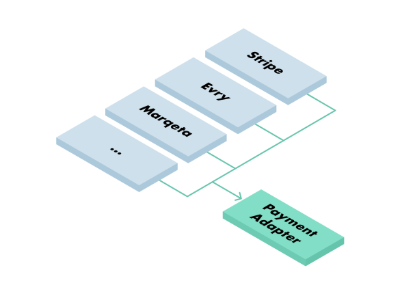
It brings a plug-and-play approach for our clients, whether that is a KYC provider, a payment rail or a fraud system.
That is what composable architecture means to us.
Who are we? We are FoundryOS and we are building the future fabric of Financial Services.